
Reviewed against Pakakumi's current terms and responsible gambling policy. Last updated Jul 3,. Reviewed by Jack Owens, Managing Editor.
Part of our complete guide to playing Aviator in Kenya. The multiplier is the entire game — understanding what it represents and why it behaves the way it does makes every other decision in Aviator easier.
What the Multiplier Number Represents
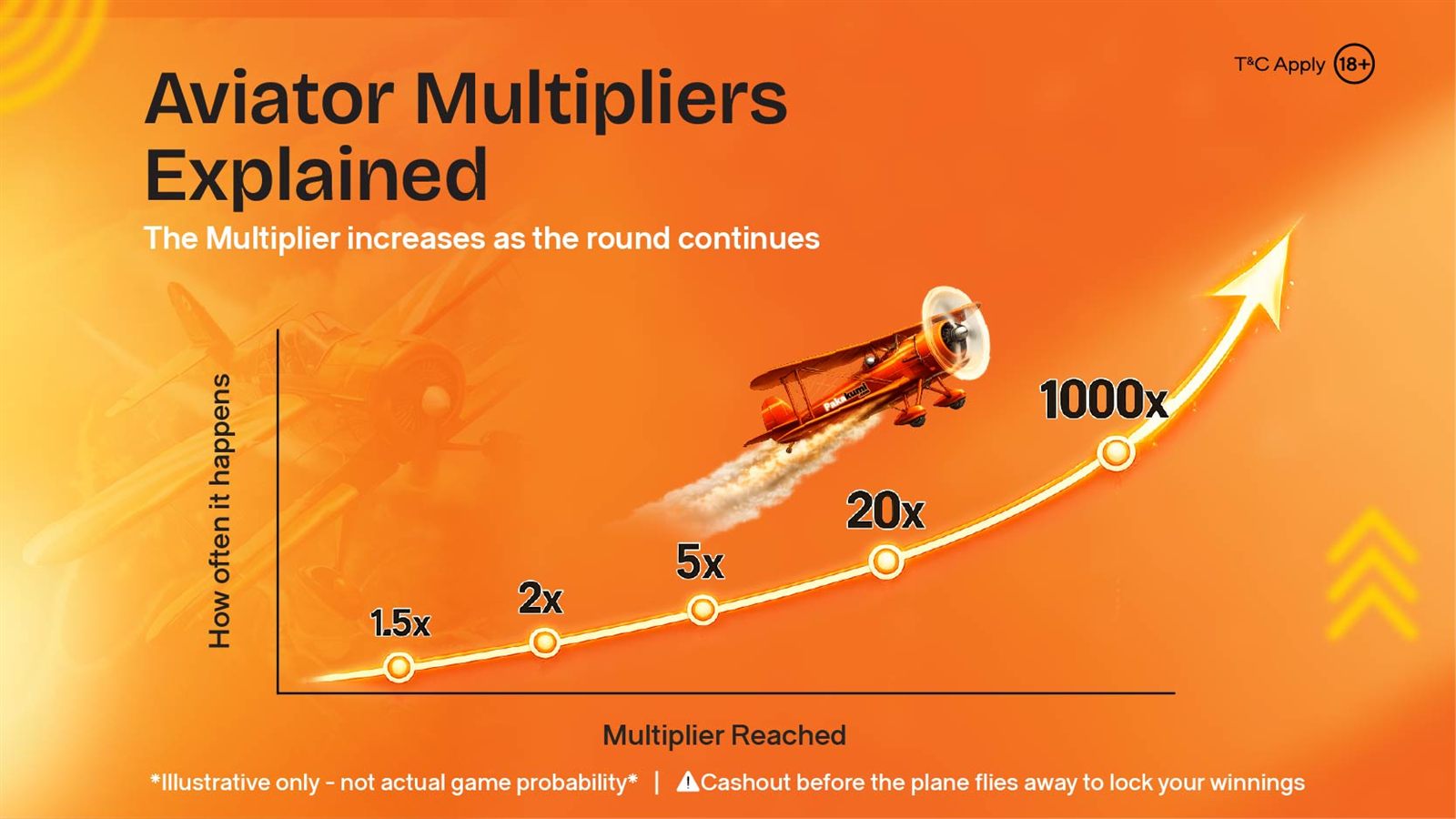
The multiplier is simply the factor your stake is multiplied by if you cash out at that exact instant. Stake KSh 100 and cash out at 2.50x, and you receive KSh 250. It starts at 1.00x every round and climbs for as long as the round is live — there's no cap built into how high it can climb, only the moment the round ends.
Why Big Multipliers Are Rare
Reaching 2x happens far more often than reaching 20x, and reaching 20x happens far more often than reaching 100x. This isn't a technical limitation — it's the mechanism that makes the game work: low multipliers need to be common enough to keep the game sustainable, while high multipliers stay rare enough that the payout on the occasions they land is worth publicising. Every round's crash point is generated independently, so there's no pattern to "catch" — a big multiplier isn't more or less likely just because it's been a while since the last one.
Setting a Cash-Out Target
There's no objectively "correct" multiplier to target — our cash-out strategy guide breaks down the low, medium, and high-risk approaches players commonly use. The only genuinely useful habit is deciding your target before the round starts, since deciding mid-round — while the number is climbing and adrenaline is up — is exactly how sessions run past a planned budget. Our Aviator guide covers manual vs. auto cash-out in more detail.
Frequently Asked Questions
What does the multiplier number in Aviator mean?
It's the factor your stake is multiplied by if you cash out at that instant. A 3.00x multiplier means a KSh 100 stake becomes KSh 300 if you cash out right then.
Why are high multipliers like 100x so rare?
Every round's crash point is independently random, and the game's design means the probability of reaching very high multipliers is deliberately low — that scarcity is what allows the payout to be large when it happens, while the game remains sustainable across the far larger number of rounds that crash early.
Does the multiplier ever stop climbing?
No — for as long as a round is live, the multiplier keeps climbing until the moment it crashes. There's no ceiling built into the climb itself; the round simply ends when the crash point is reached.
Is a higher multiplier target always a better strategy?
Not automatically. A higher cash-out target increases the potential payout but also increases the chance the round crashes before you get there. There's no target multiplier that's objectively "correct" — it's a risk/reward trade-off you set based on your own budget and comfort with variance.
Related reading