Pakakumi Fully Sponsors Kaongo Girls Secondary School Renovation
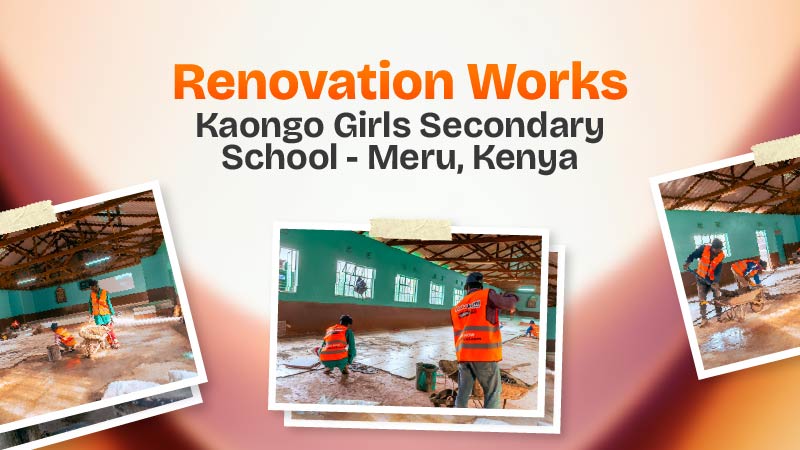
A closer look at the renovation work at Kaongo Girls Secondary School, including improvements to classrooms, sanitary facilities and science learning infrastructure.
A look at the schools, communities and responsible gaming initiatives supported by Pakakumi across Kenya.
Community Strong is Pakakumi's approach to community investment in Kenya. Rather than treating corporate social responsibility as a once-a-year donation, the programme is built around projects where support can address a practical need within a school or community.
The work so far has included improvements to education facilities in Meru County, food support for a school feeding programme in Embu County, and initiatives designed to give young audiences clearer information about responsible gaming.
These projects are different in their purpose and setting, but they share the same principle: community investment should respond to an identifiable need rather than exist simply as a brand exercise.
One of the programme's featured projects is the renovation of Kaongo Girls Secondary School in Meru County. The project focuses on the physical environment in which students learn, with work covering classrooms, sanitary facilities, laboratory infrastructure and other school facilities.
The objective is straightforward: give students a school environment that is better equipped for everyday learning. Education support does not always mean scholarships or tuition assistance. In this case, the focus is on the infrastructure students use every day.
Read the full project story →
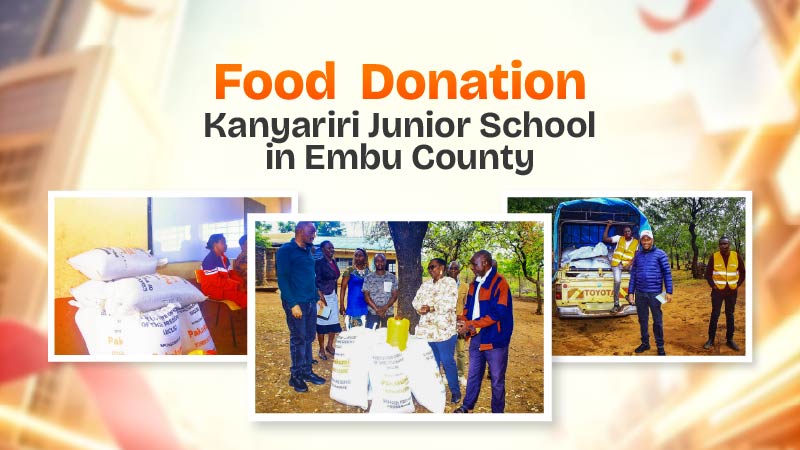
At Kanyariri Junior School in Embu County, Community Strong took a different form. Pakakumi provided food supplies including maize flour, rice, beans and cooking oil to support the school's feeding programme.
Food support can have an immediate effect on a school day. When schools have the resources to maintain a feeding programme, children can spend more of their time in class rather than dealing with the effects of going through the day without a meal.
It is a smaller, more direct intervention than a major infrastructure project, but that is precisely the point. Community needs are not identical from one location to another.
Read the full project story →There is no single definition of what a community needs. A school might require functioning laboratory facilities or improved sanitation. Another may need help keeping its feeding programme running. The appropriate response depends on the situation on the ground.
That is why Community Strong covers different types of intervention. Education infrastructure addresses the environment in which students learn. Food support responds to an immediate nutritional need. Responsible gaming initiatives address the relationship between players, entertainment and money.
The intention is not to make every project look the same. It is to support useful work and document it clearly enough for people to see what was done and where the support went.
Community investment does not stop at physical projects. As a gaming operator, Pakakumi also has a responsibility to address how people use its platform.
That includes giving players practical tools rather than relying solely on warnings. Self-set deposit limits, for example, allow players to decide how much they are comfortable depositing over a particular period. Responsible gaming campaigns with Kenyan creators take the conversation beyond the platform and present moderation as part of normal gaming behaviour.
The message is simple: gaming should remain entertainment. It should not become a response to financial pressure or interfere with everyday responsibilities.
Read about the responsible gaming campaign →These articles go behind the programme and document individual projects in more detail.
A closer look at the renovation work at Kaongo Girls Secondary School, including improvements to classrooms, sanitary facilities and science learning infrastructure.
Maize flour, rice, beans and cooking oil were provided to support the school's feeding programme in Embu County.
Community Strong is Pakakumi's community investment programme. It brings together practical projects in areas including education, food security, youth awareness and community wellbeing.
Featured projects include the renovation of Kaongo Girls Secondary School in Meru County and food support for Kanyariri Junior School in Embu County.
Yes. Responsible gaming is part of Pakakumi's wider approach to player and community wellbeing. This includes awareness campaigns and tools such as self-set deposit limits.
Detailed project stories are published on Pakakumi News and linked from this page. They provide additional information about the project, location and work carried out.
Play Within Your Means
Gaming should remain entertainment, not a way to deal with financial pressure. Set a deposit limit or take a break if gaming stops feeling enjoyable. M-Pesa Paybill 547717. Must be 18+ to play. BCLB Licensed.