
Reviewed against Pakakumi's current terms and responsible gambling policy. Last updated Jun 22,. Reviewed by Jack Owens, Managing Editor.
The live curve on a Crash round is the most visible part of the game, and it's easy to read more into its shape than it actually contains. Here's what it does and doesn't tell you.
What the Curve Actually Shows
The curve is a real-time readout of the current multiplier — nothing more. As the multiplier climbs from 1.00x, the curve rises to match it visually. That's its entire function: showing you, at a glance, what your stake would currently be worth if you cashed out right now.
The Misreading Worth Avoiding
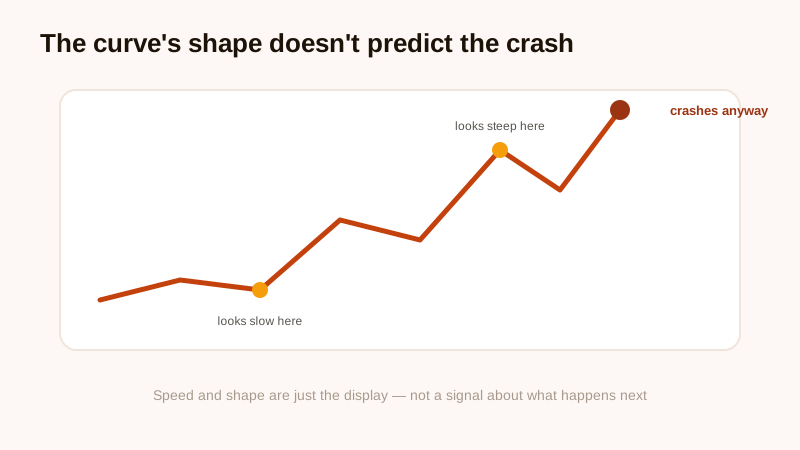
Some players read meaning into how the curve moves — a "slow" climb feeling like a sign the round will run longer, a "fast" climb feeling like it's about to crash. Neither is true. Our odds and probability guide covers why each round's crash point is generated independently and isn't influenced by, or reflected in, how the multiplier happens to be animated on screen at any given second.
What's Actually Useful to Watch
If you're using manual cash-out, the useful skill is simply reacting promptly to the number itself, since your cash-out target is a plan you made before the round started. If reacting quickly under pressure isn't something you want to rely on, our auto cash-out guide covers removing that pressure entirely.
Frequently Asked Questions
Does the shape or speed of the curve predict when it will crash?
No. The visual curve is a real-time display of the current multiplier, not a forecast — its speed or steepness at any moment carries no information about when the round will end.
Why does the curve sometimes look like it's slowing down or speeding up?
That's a visual/animation choice in how the multiplier is displayed, not a signal about the round's outcome. Treat it as a readout of the current number, nothing more.
Is watching the curve closely a useful skill?
It's useful for reacting quickly if you're using manual cash-out, but it doesn't give you predictive information beyond the current multiplier value itself.
Related reading